

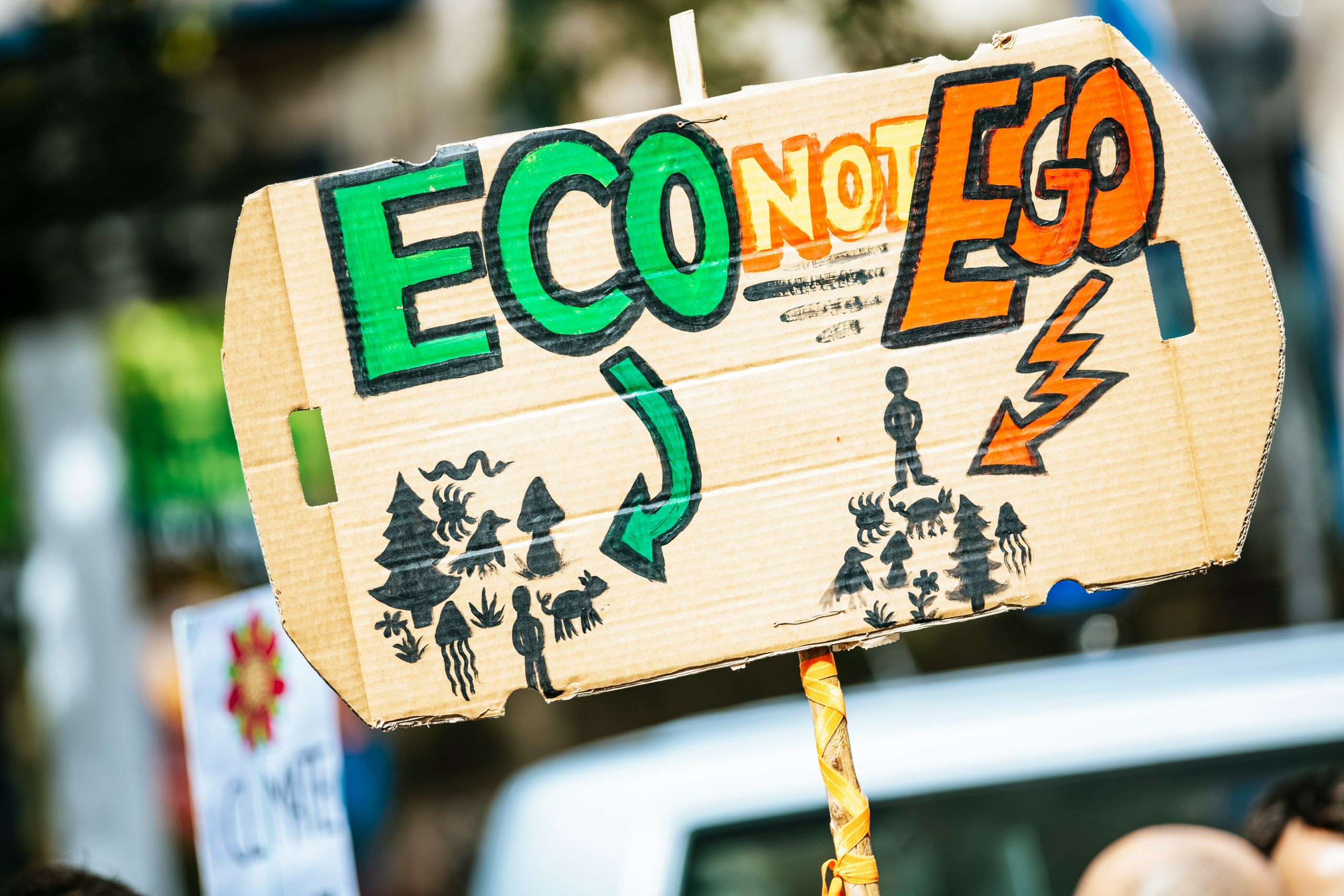
Political ecology “takes sides and argues a position… even a position of so-called neutrality rests upon partisan assumptions.” ~ Piers Blaikie, Political Economy of Soil Erosion in Developing Countries, 1985.
In a recent post we met a single mother from Doncaster living in a damp, flood-prone flat, working a zero-hour contract at an Amazon warehouse, forced to choose between heating and eating. We traced how her interconnected crises—fuel poverty, housing insecurity, hunger, precarious work, environmental degradation—all lead back to the same root: extractive capitalism.
But how do we develop the analytical tools to see these connections clearly and consistently in order to create policies that address the inequalities they create? How do we move from recognising patterns to understanding the power structures that create them?
This is where political ecology, as an analytical tool, becomes essential.
Political ecology was the main theoretical framework of my PhD in resource conservation in East Africa. The more I read the more I realised that it fundamentally underpins much of Green politics. It asks uncomfortable questions about power, profit, and justice within the relationship of people and their environment that mainstream discourse would rather avoid.
At its simplest, political ecology chronicles how politics, power and the relationships between people and their environment shape one another.
But importantly, the aim of political ecologists is to point out social injustices in order to challenge them. As Piers Blaikie, the godfather of political ecology, wrote in 1985, political ecology picks a side. Unlike supposedly neutral environmental science or technocratic policy analysis, political ecology explicitly stands with those who bear the costs of environmental and social destruction while others reap the benefits.
It’s also quite a dense academic discipline, so this is an attempt to unpack and introduce an enormously exciting analytic to advance Green politics and reframe national political conversations to include ecological considerations in issues of economic and social justice.
Because there is a direct line worth exploring here, from political ecology as a diagnostic to ecosocialism as a governance framework that makes Green politics more than well-meaning environmentalism – it becomes a tool for liberation.
Origins: When ecology met Marx
Political ecology emerged in the 1970s and 80s when radical geographers, anthropologists, and ecologists recognised that environmental problems couldn’t be understood through ecological science alone.
Traditional ecology treated humans as outside of nature but disturbing natural systems. Conservation biology often blamed local communities—particularly in the Global South—for deforestation, soil erosion, and biodiversity loss. But researchers working directly with marginalised communities saw a different story.
Drawing on a number of radical academic philosophies, not least Marxist political economy and postcolonialism, political ecology asked: why exactly are certain people destroying their environments?
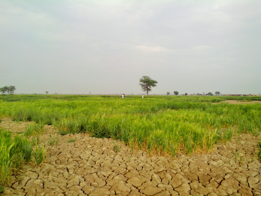
The answer they found wasn’t ignorance or cultural backwardness – it was dispossession, debt, corporate land grabs, and global market pressures, nearly always from Northern hemisphere institutions. Peasant farmers in South Asia weren’t choosing to overwork fragile soils; they were forced onto marginal lands by plantation agriculture serving export markets. Forest communities in East Africa weren’t irrationally reducing the rainforest to agricultural farmland (and thereby threatening critically endangered species and biodiversity); often, they were growing cash crops for multinational agribusiness as a means of alleviating grinding poverty.
This early political ecology was explicitly Marxist in its core insight: environmental degradation as a class issue. It understood that capitalism’s ‘metabolic rift’ – a Marxian concept of the disrupted relationship between human society and nature under capitalism – is experienced differently depending on your wealth and power. The wealthy consume resources extracted from ecosystems they’ll rarely see, while working class and colonised communities live with the toxic consequences.
More recently, feminist political ecology has advanced further still the study of relations between nature and society to better understand the embodied and emotional aspects of environmental governance. This centres gender as a critical variable in shaping resource access and control, intersecting with class, caste, race, culture, and ethnicity to shape processes of ecological change. More recent still, political ecology has seen a turn to the ‘decolonial’, to the rethinking of political ecology further beyond gender and class to considering indigenous knowledge and even non-human animals. This recent evolution has expanded political ecology to consider postcolonial, Black, indigenous and Global South feminism, highlighting that even our own perspectives and knowledge of feminism can still be colonial and Eurocentric.
Core components of political ecology: Power, access, and liberation
Political ecology rests on several interconnected principles that distinguish it from both traditional ecology and conventional political analysis:
1) It centres political economy. Every environmental issue involves social questions of ownership, control, and distribution. Who owns the land? Who controls extraction rights? Who profits from extraction? These aren’t secondary considerations – they’re fundamental to understanding why environmental and related social problems exist and persist.
2) It analyses chains of explanation. Political ecologists trace environmental degradation through multiple scales, from the immediate (a farmer clearing a forest) to the structural (World Bank debt forcing cash crop production) to the global (Northern consumption patterns driving commodity demand). Our Doncaster mother’s flooded home isn’t just about local planning failure – it connects to financialised property markets, national austerity gutting flood defences, and climate change driven by fossil fuel capitalism.
3) It examines access and control, not just scarcity. Mainstream environmentalism often frames problems as too many people using too few resources, a radically dangerous road that leads to racism and eco-fascist discourse and should be permanently expelled from Green movements. Political ecology asks instead: as there are enough resources for everyone, who is denied access, and why? There is enough food produced to feed everyone in the world – millions go hungry (including 1 in 5 children in the UK) because food provision is dictated by market control and price signals, not human need. Britain isn’t short of housing – we just have empty investment properties while families live in mouldy flats and others with no homes at all. Resource scarcity is manufactured through inequality.
4) It embraces liberation ecologies. Building on environmental justice movements, feminist political ecology and Indigenous scholarship, political ecology recognises that different communities experience environmental harm differently based on intersecting oppressions of class, race, gender, and colonialism. It sees resistance and alternative practices—from indigenous land occupations in the Global South to local community energy cooperatives in the UK – as challenging capitalist relations of nature.
Building political ecology into UK Green politics

My enormous frustration with the Green Party during my 20+ year membership has been its co-option by the (‘small g’) green lifestyle movement, one of ethical consumption that loads the blame for climate change onto the individual for not buying ethically enough. The logical nadir of this co-option arrived when, canvassing communities on Hackney council estates, sympathetic people would tell me they couldn’t vote Green because they didn’t feel they lived a ‘green’ enough lifestyle.
Political ecology reclaims Green politics from these lifestyle choices and policy tweaks into a systemic analysis and transformative program. It reveals why in fact individual consumption changes, international carbon markets and green tech won’t solve our crises – because these solutions leave destructive power structures and dangerous inequality intact.
Return to our Doncaster family. A liberal environmental approach might offer energy efficiency advice or a grant for better insulation. Traditional socialism might focus solely on the zero-hour contract and wage theft. But political ecology sees the totality: privatised energy extracting wealth while climate breaks down, housing treated as commodity not a right, labour precaritised to maximise profit, land use determined by speculation, flood risk distributed by class.
It reveals capitalism as an integrated system of exploitation spanning humans and the environment, extracting profit for the 1% while making the rest of us poorer and trashing the planet on which we survive. As one of my friends once said, if capitalism isn’t meeting people’s basic needs AND it’s destroying our planet… what’s the point?
This diagnostic capacity makes political ecology indispensable for ecosocialist policy creation.
It instinctively has Greens, when thinking about policy, asking: Who benefits from current arrangements? Who has decision-making power? What alternative forms of ownership and governance could democratise both economic and ecological decisions? How do we transition in ways that don’t simply displace harm onto other communities or future generations?
As Greens we are transforming political ecology, as an academic analysis predominantly focussed on Global South liberation struggles, to real-life national conversations and radical ideas of national governance for these green isles. More of this, please!
Political ecology insists we can’t address poverty without addressing ecological destruction, can’t solve climate crisis without transforming class relations, and can’t achieve justice without democratising control over nature and production.
And like Greens, globally and nationally, political ecology picks a side – explicitly, unapologetically – and stands with the majority of us who bear the terrible costs of destructive capitalism.


1 Comment
Pingback: Green thought: Ecofeminism - Greenisles.uk