

By James Baker, Platform Power and Free Expression Program Manager at the Open Rights Group.
As a child, I remember journeys before screens were commonplace. Sitting with my head against the cool window of a car or train, feeling the vibrations and watching landscapes roll past. The views of nature and the countryside were amazing, but too often I would see rows and rows of flats, shops, motorway barriers, pylons, or fields of the same monoculture crop. All these environments were built for efficiency and scale, but their uniformity creates a sense of unease, much like the digital backrooms of the internet. Beneath that uniformity lies fragility. To create such order in one place, these systems displace their chaos elsewhere through reliance on fossil fuels and external inputs such as GMO seeds, chemicals, and fertiliser.
Travelling these days often involves a digital screen, either for entertainment or work. I sometimes reflect on how our digital landscapes increasingly echo the physical environments we have created. A handful of large corporations, such as Microsoft, Oracle, Amazon, Meta, Apple, and Google, control much of the digital landscape. Small, community-run spaces have become an endangered species, hanging on like urban wildlife in the gaps between these platforms. It’s fair to say our digital diversity is on the rocks.
As digital citizens, we often find ourselves locked into these large platforms, much as we might have to work in large office blocks or live in high-rise flats. We are free to leave in theory, but in practice we are constrained by systems we now depend on, with alternatives too costly or difficult to obtain. These platforms and large-scale technological solutions, both for social media and for delivering government services, might seem efficient, but like monoculture fields, their uniformity conceals fragility.
IPES-Food’s report Head in the Cloud offers a stark warning about how increasingly globalised and centralised farming practices risk making farmers dependent on a narrower range of crops, equipment, and methods. You are likely familiar with issues surrounding GM seeds, where farmers must purchase them each season and cannot adapt or save them. Extractive dependency is part of the design. What is happening in agriculture is being echoed in the digital space: software is locked down, user control is limited, and a small number of suppliers dominate the market. The problem is not dependence per se; everything in nature depends on something else, but when dependence is asymmetric, extractive, and controlling, it harms the whole ecosystem.
Ecological digital sovereignty
When we are not in control of our own software, whoever does control it holds power over us. This is not abstract theory. Members of the International Criminal Court found themselves locked out of systems and accounts due to US sanctions. During the Ukraine War, John Deere tractors were remotely disabled via built-in telematics systems. Computer games can now also be killed when a publisher decides to turn them off, which triggered the global Stop Killing Games campaign. Users can find themselves locked out of all their accounts when an AI algorithm finds them guilty, without trial, of a platform violation. There are enough real-world examples of people losing control over software and suffering losses as a result that this is no longer an abstract question.
In an age where international law breaks down in favour of unilateralism, and in a world where Donald Trump threatens blockades, tariffs, or seeks to exert control over global trade, it becomes increasingly plausible that countries could be held to digital ransom. Control over software is now a form of geopolitical power. In Palantir’s manifesto, the company proclaimed that the atomic age is ending and that deterrence based on AI will begin. The message is clear: software is a weapon. This new geopolitical power might not be wielded through physical force or blockades, but through the threat of a switch being flicked. Avoiding this new form of geopolitical control and power lies at the core of the concept of digital sovereignty—that individuals, communities, and nations should have control over the technology they use. Open Rights Group sets out the case for digital sovereignty in its latest report.
Ecological digital sovereignty is the ability of individuals, communities, and nations to participate in digital systems that are diverse, interoperable, locally adaptable, and not controlled by any single point of power.
Sovereignty is a powerful concept. As we cast our minds back ten years to the Brexit referendum and the impact it had on these isles, we are reminded that the desire for sovereignty and control over our own affairs is a rallying cry for many people. Yet in our modern world, economies and trade are deeply intertwined. As much as individual countries might want control over everything, mutual trade dependency requires shared rules and standards. Mutual dependency often brings countries closer together and makes the prospect of all-out war less likely.
So, is it possible or even desirable to achieve sovereignty when we rely on one another? Historically, the pursuit of complete self-sufficiency—or autarky—has often emerged alongside militarised nationalism. In the modern world, we now see Russia imposing bans on VPNs and blocking platforms such as WhatsApp, also in the name of digital sovereignty. Yet this is less digital sovereignty and more digital dictatorship. For these reasons, people are often sceptical of the term sovereignty, and alternatives such as digital autonomy are frequently floated. However, a sovereign digital system is not one that stands alone, but one that can participate in wider networks without becoming dependent upon or dominated by them.
In an interconnected world, and in this essay, I argue that we must strive for sustainable and resilient systems: ones where we build interconnections and partnerships with each other based on mutual benefit and symbiosis. This is why I am setting out the case for an ecological model of digital sovereignty. Ecological digital sovereignty rejects both the extremes of monocultural digital dependence on large platforms and the isolationist autarky of authoritarian nations trying to cut themselves off from others and build their own nationalistic digital worlds surrounded by vast information firewalls. Adopting ecological digital sovereignty as a framework would help advance the vision for rewilding the internet set out by Maria Farrell and Robin Berjon.
Ecological digital sovereignty is the ability of individuals, communities, and nations to participate in digital systems that are diverse, interoperable, locally adaptable, and not controlled by any single point of power. It achieves a natural diversity because there are many platforms, protocols, and software options. In such a biodiverse software ecology, users, organisations, and states are not locked into any one piece of software. Things can evolve, and we gain systems-wide resilience because there are fewer single points of failure. It also allows for local adaptation to different environments, as we would have more locally owned community infrastructure. An example of this might be a country creating its own Linux distribution that meets its particular cultural needs. Closer to home, both Wales and Scotland have their own community-run Mastodon servers. Peraps our local authorities and English regions could follow their lead?
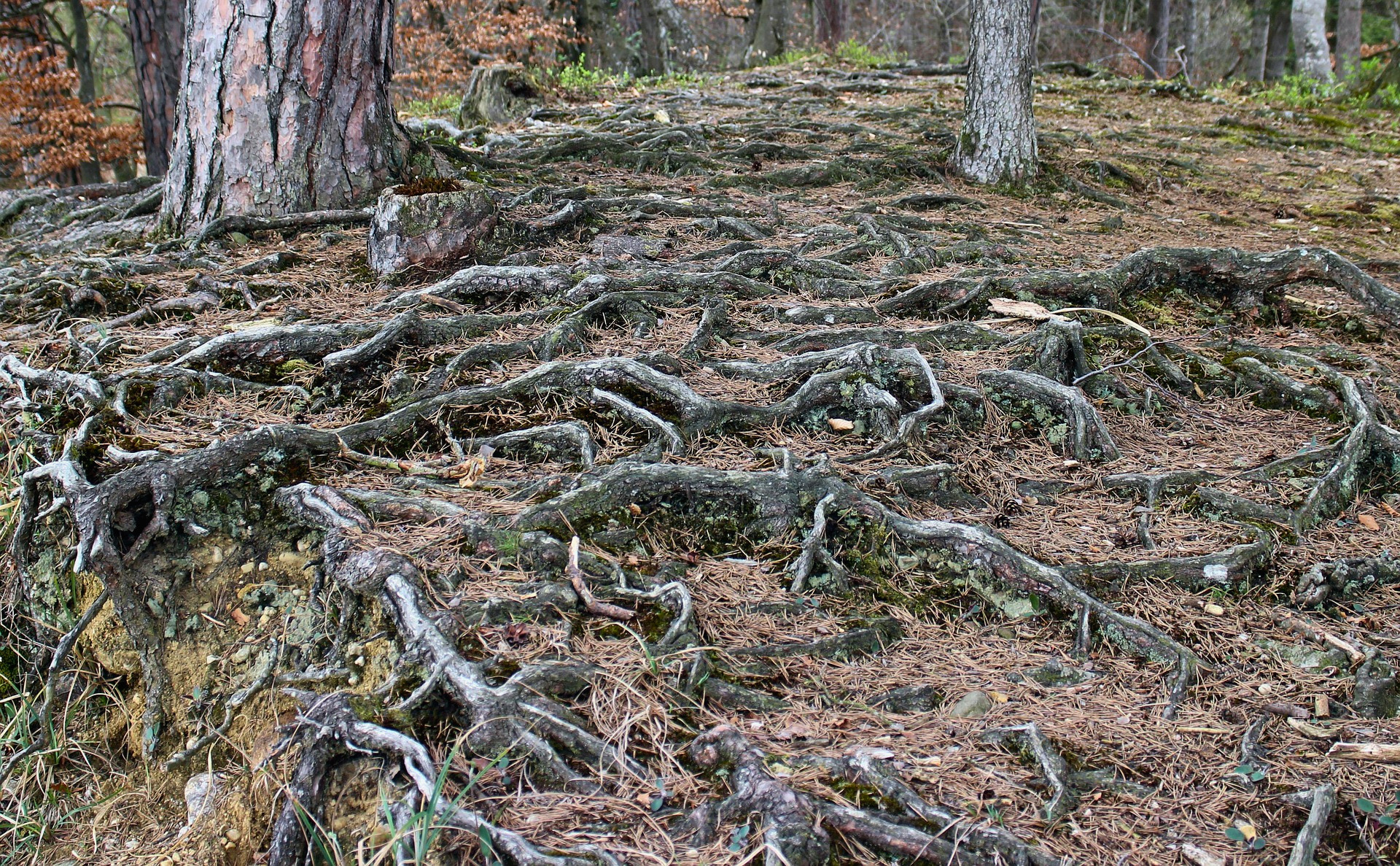
Within ecological digital sovereignty, we have interdependence. This is achieved through interoperability and open standards. Together, these help to create the digital equivalent of a mycorrhizal network, known sometimes as the ‘wood-wide web’ where different species and platforms can still connect through a shared fungal network. A proper web of life, where the digital mirrors the natural world. With ecological digital sovereignty, we also gain the repairability of the entire ecosystem through open source code. In an open source system, the ability to regenerate and repair problems emerges as a property of the system itself. This mimics the ability of natural ecosystems to recover and return to mature habitats, not through the actions of any single actor, but through many interconnected parts of the system working together.
Building a world based on ecological digital sovereignty would also help us minimise the risks of online harms that arise within the current digital system. The root cause of many of these harms is the underlying business model upon which platforms are built: the maximisation of our attention for the monetisation of platforms through surveillance-driven advertising systems. It is this pursuit of attention above all else that results in algorithms designed to drive the most emotionally shocking content. These systems bring out our worst instincts for anger, division, and hatred because content that pushes those buttons rises to the top.
The road out of digital serfdom lies in all of us making a conscious effort to cultivate and build a better world. If we fail to act, the interests of powerful platforms and nations will continue to dominate.
This model has contributed to the culture wars that drive division and have turned ecological efforts to tackle climate change into a battleground. So far, many efforts to tackle online harms are comparable to China’s Four Pests campaign or Australia’s release of Cane Toad in 1935: well-intentioned efforts to tackle one harm that end up introducing new harms into the system. In the case of digital ID systems used to access web content, those harms can come in the form of control, loss of privacy, and the normalisation of surveillance systems. Ecological digital sovereignty instead takes a systems-level approach to reforming the root causes of why harms arise in the first place.
The conditions for building this new digital future are within our reach. We need to start cultivating digital permaculture. The methods that help us get there are well documented, built on the back of years of digital rights activism.
We need public digital infrastructure based on open source code. This requires us to publicly fund and support digital infrastructure just as we fund physical civic infrastructure, so that countries work together to improve shared civic systems and no country can threaten to turn off another’s infrastructure.
We need open standards that protect the network and the open web. These allow people to communicate, connect, and build together.
We need interoperability standards for large platforms. These enable users to switch away from harmful platforms and reduce the lock-in effect and structural power of dominant systems.
We need a right to repair and modify hardware and software systems.
Together, these form the ecosystem conditions necessary for a healthy digital future, not merely a list of policy demands.
Moving from Control to Cultivation
The road out of digital serfdom lies in all of us making a conscious effort to cultivate and build a better world. If we fail to act, the interests of powerful platforms and nations will continue to dominate. This will eventually lead to the degradation of both digital systems and the ecological systems upon which they rely.
To build something better, we need to begin the practice of cultivating a healthier digital world. One place we can start is by making our own digital switches. On the first Sunday of each month, the Digital Independence day movement encourages people to make small, manageable changes to the technologies they use.
Yet lessons from the fight against climate change also show us that individual action alone is not enough. We must also build political momentum for collective action. As MPs begin to catch up with the digital sovereignty debate already taking place across Europe, we have the opportunity to shape an open ecological digital sovereignty as a national strategy.
The question is not whether we control our digital systems, but whether we are willing to cultivate them together as living ecosystems.
JAMES BAKER
PLATFORM, POWER AND FREE EXPRESSION PROGRAMME MANAGER, ORG
James is the Platform Power and Free Expression Program Manager at the Open Rights Group. He has a background in Local Government, political campaigning and advocacy.
James initially worked with ORG as the Campaigns and Advocacy Manager, where he worked closely with our local ORG groups, supporters and Policy Staff to help us achieve our political campaigning objectives.
James has a proven track record of success working with elected representatives and grass roots campaigners on political campaigns. Formerly he was the Campaigns Manager at NO2ID, who campaigned successfully to block the creation of ID Cards and the National Identity Register. A government minister once described the NO2ID campaign as one of the most successful in History.
James has also worked closely with the European Parliament as the former joint chief of Staff to Chris Davies and Jane Brophy, MEPs for the Northwest Region. Before joining ORG James was a Local Government Councillor in Calderdale, and worked at the Association of Liberal Democrat Councillors, training and empowering others to become effective campaigners.


1 Comment
Pingback: The New Enclosures: Palantir, the commons, and the fight for our digital future - Greenisles.uk